CarbonTag — Giving London's small food producers the power to measure, with scientific backing, the carbon footprint of every product, from cradle to grave.

Deliverables

UX Workshop, Discovery, UX/UI Design, Front-End Development, Back-End Structuring (Supabase), Database Integration & Design System

Context

The food sector accounts for roughly a third of global carbon emissions, and the pressure to measure and cut that footprint grows every year. The problem is that calculating a product's emissions across its entire chain, from growing the ingredients through transport, processing, packaging, storage, and end of life, is a technical and expensive task that depends on reliable scientific data. In practice, it had always been restricted to large companies with the budget for specialized life-cycle assessment (LCA) consultancies. Small producers were left out, with no accessible tool, no technical expertise, and no trustworthy database to back the numbers. CarbonTag set out to change that. They already had the methodology and an emission-factor database their own team had built from scientific papers, but they needed a platform that put all of it in the producer's hands, turning a complex calculation into a simple fill-in flow. They came to us to design and build exactly that bridge: a digital product where any small food producer in London could register their products and get back a clear, scientifically grounded analysis of the emissions at each stage.

Challenge

The real difficulty wasn't the math, it was the translation. A cradle-to-grave life-cycle analysis is dense, data-heavy, and normally handled by specialists. The platform had to make that same calculation feel approachable to a producer with no sustainability background, without diluting the scientific rigor underneath. Every number on screen had to stay traceable to a real emission factor, and filling in a product could never feel like consulting work.

Solution

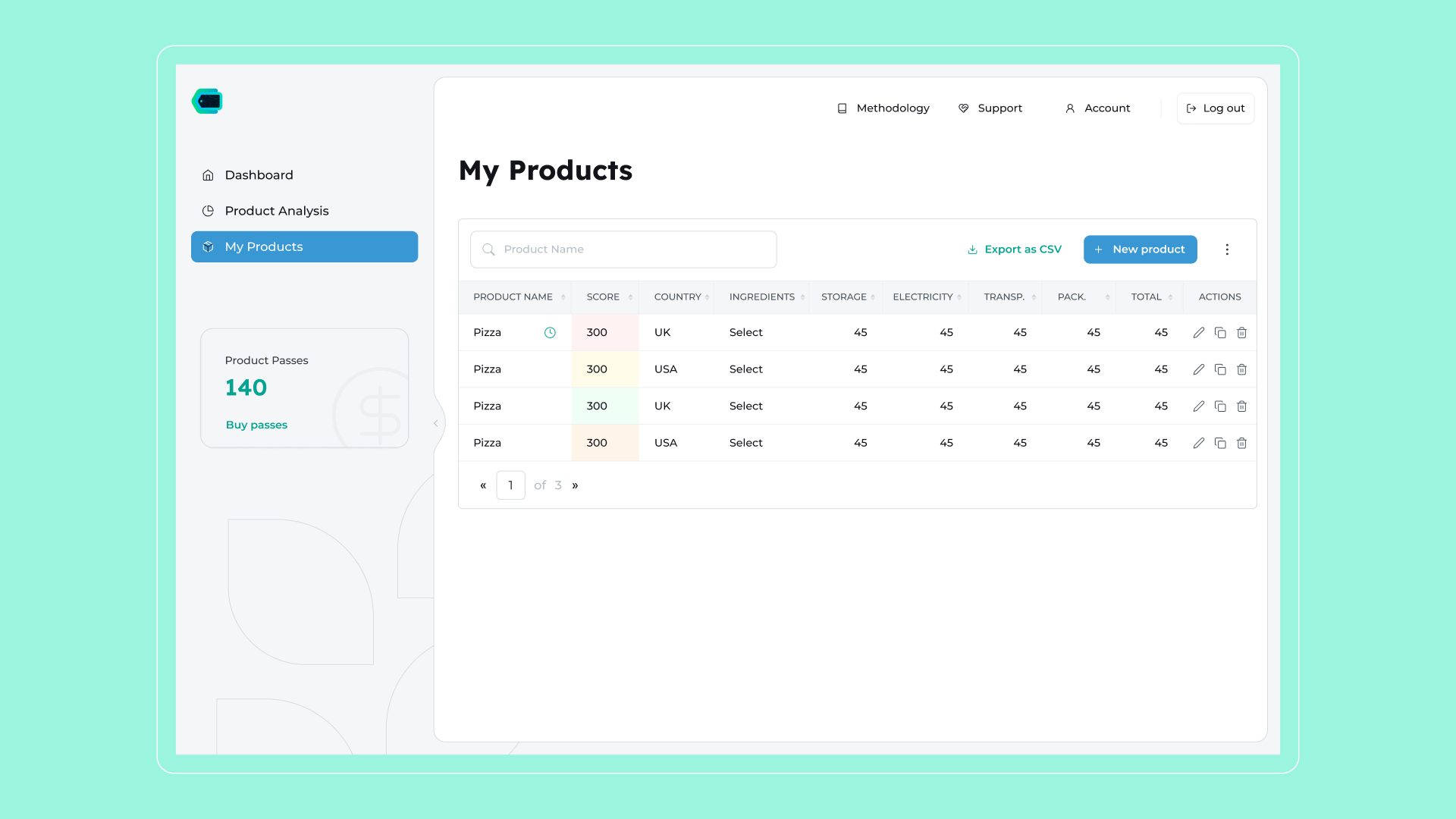
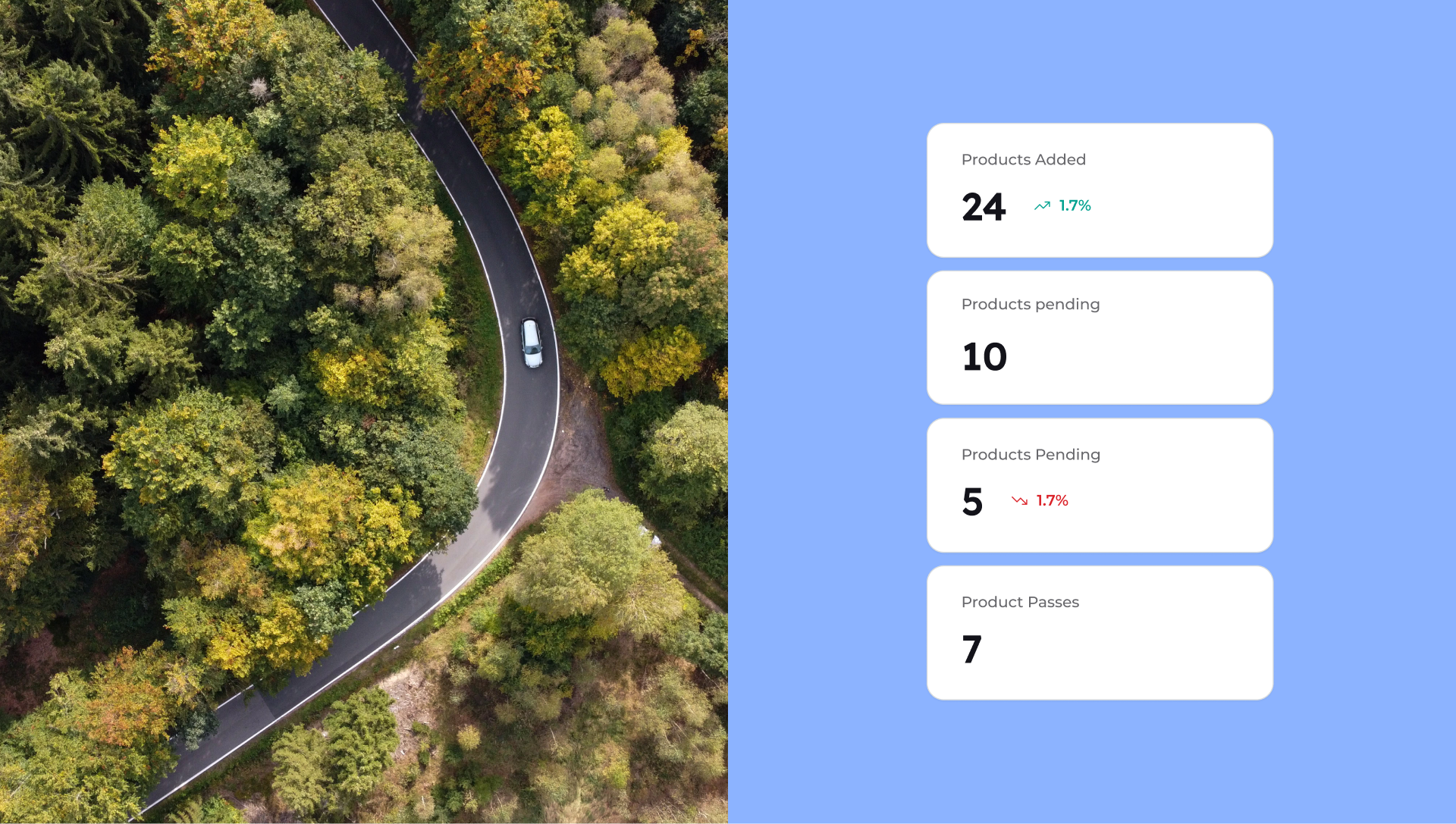
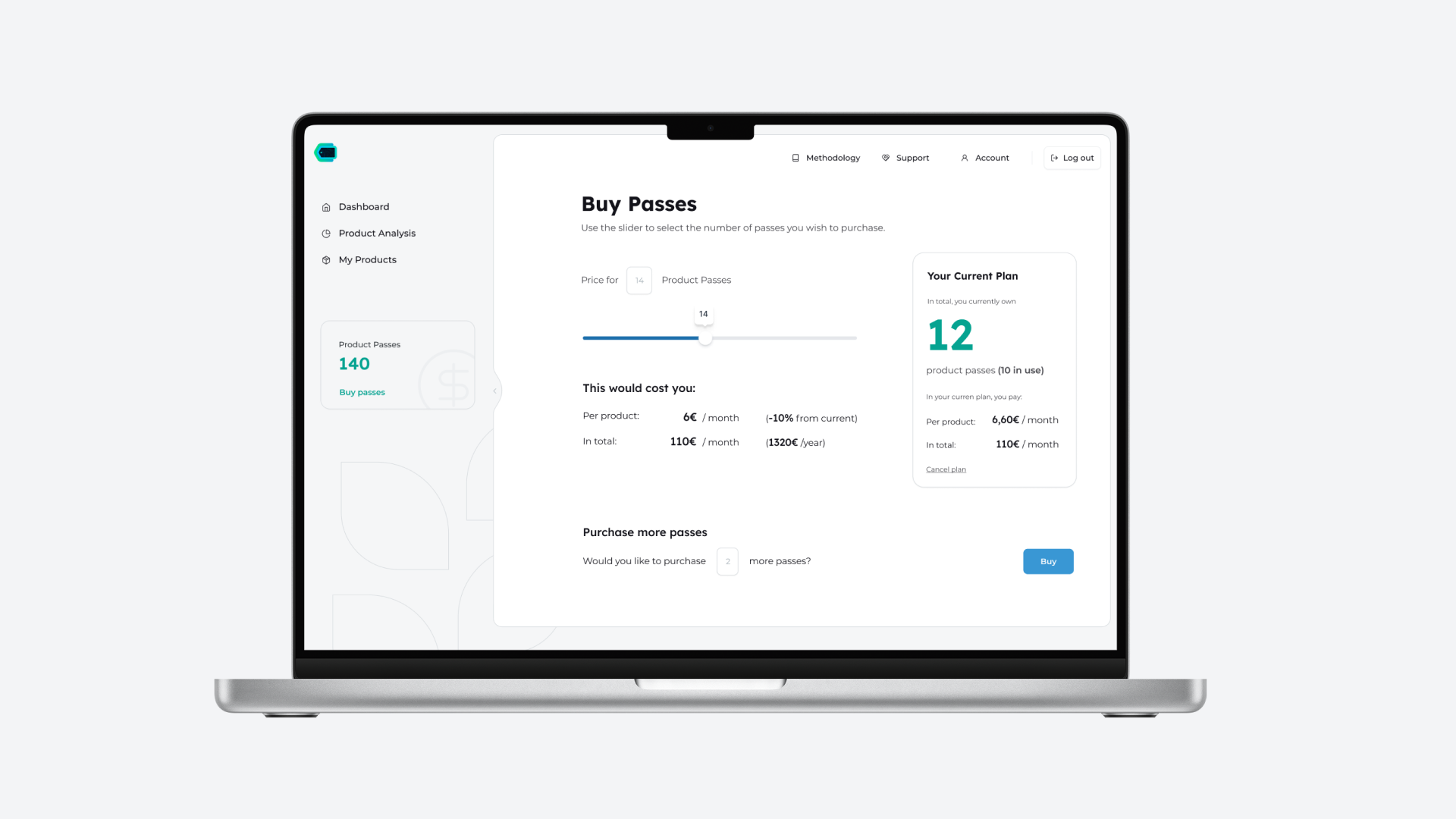
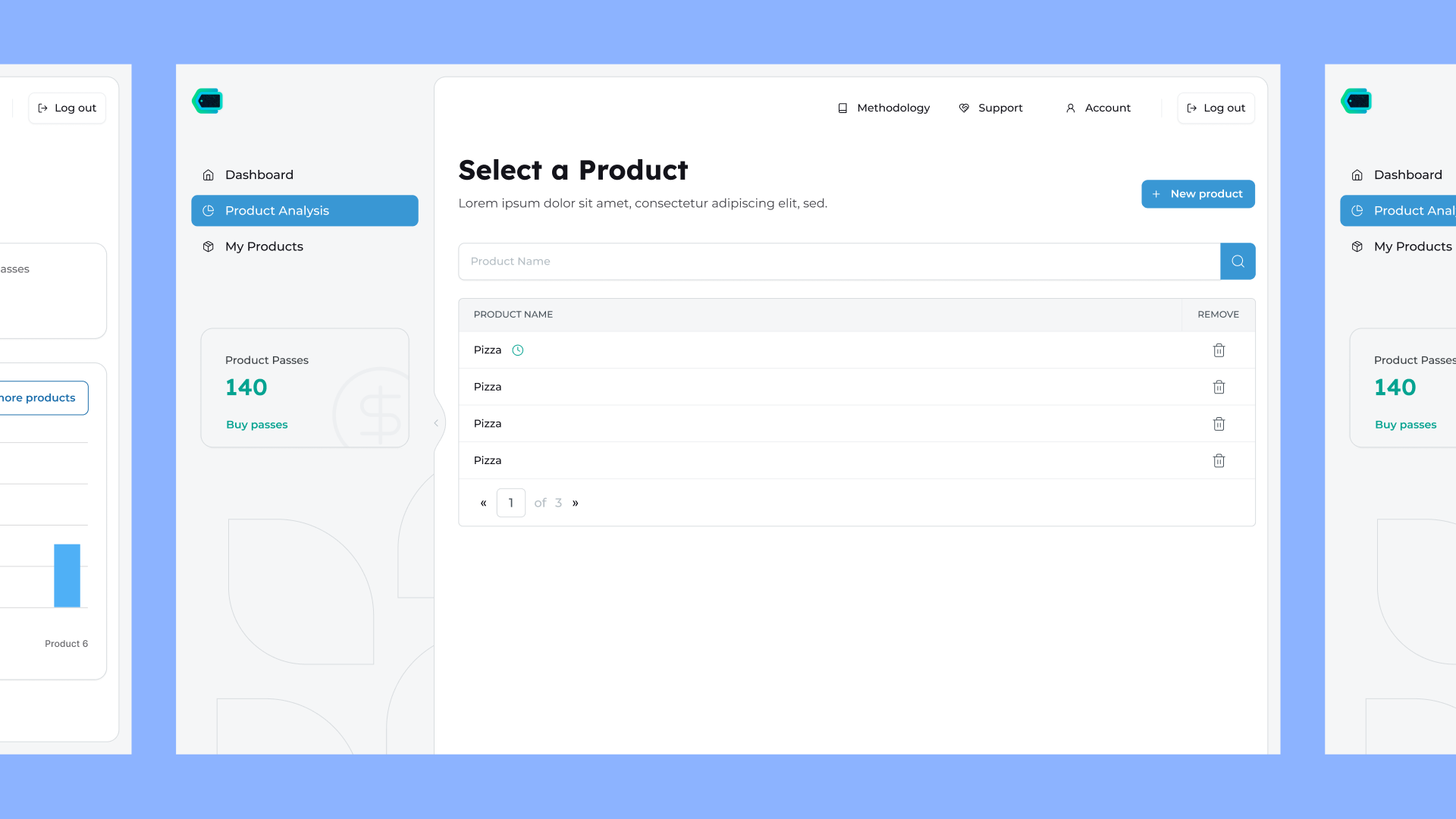
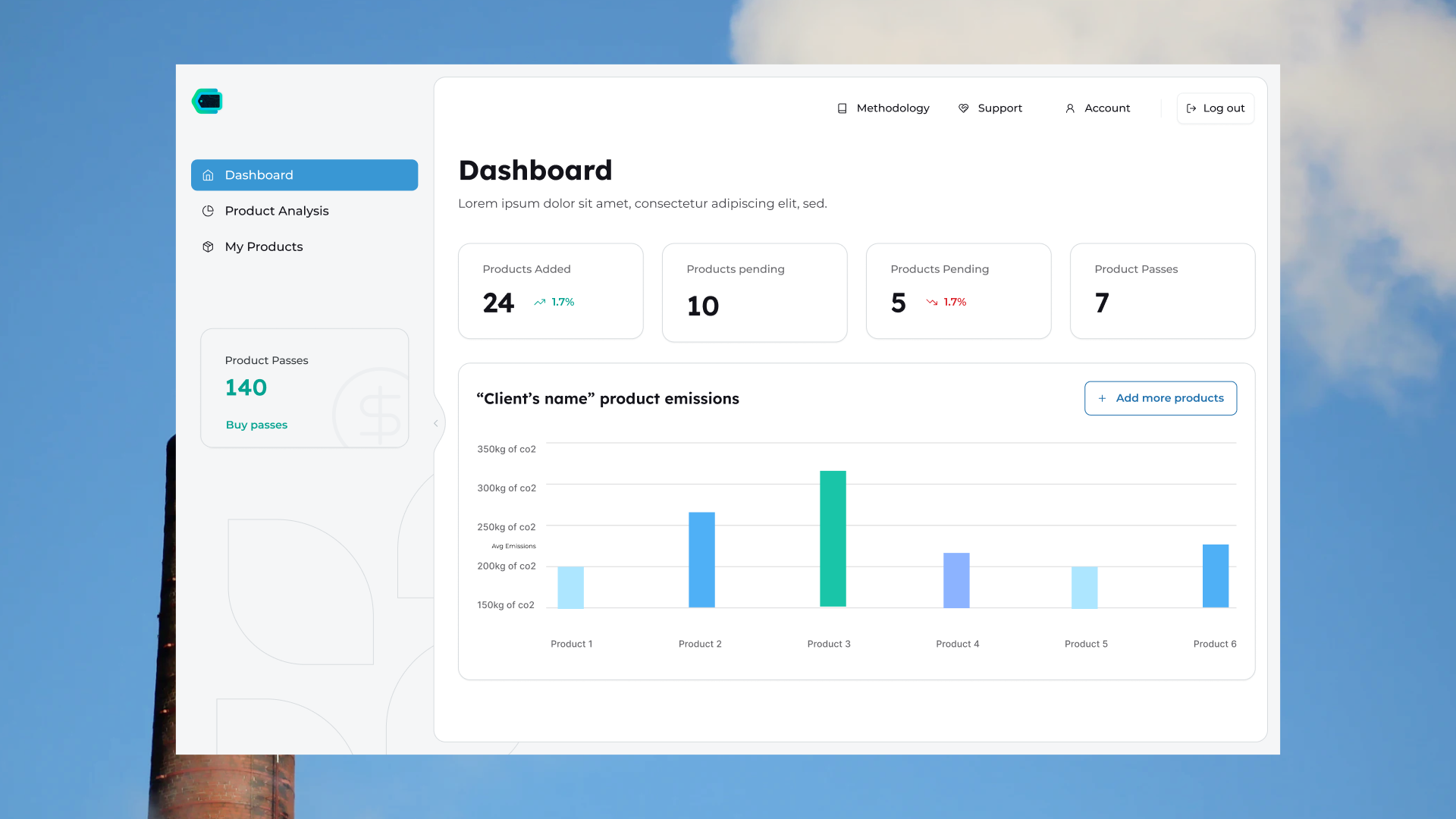
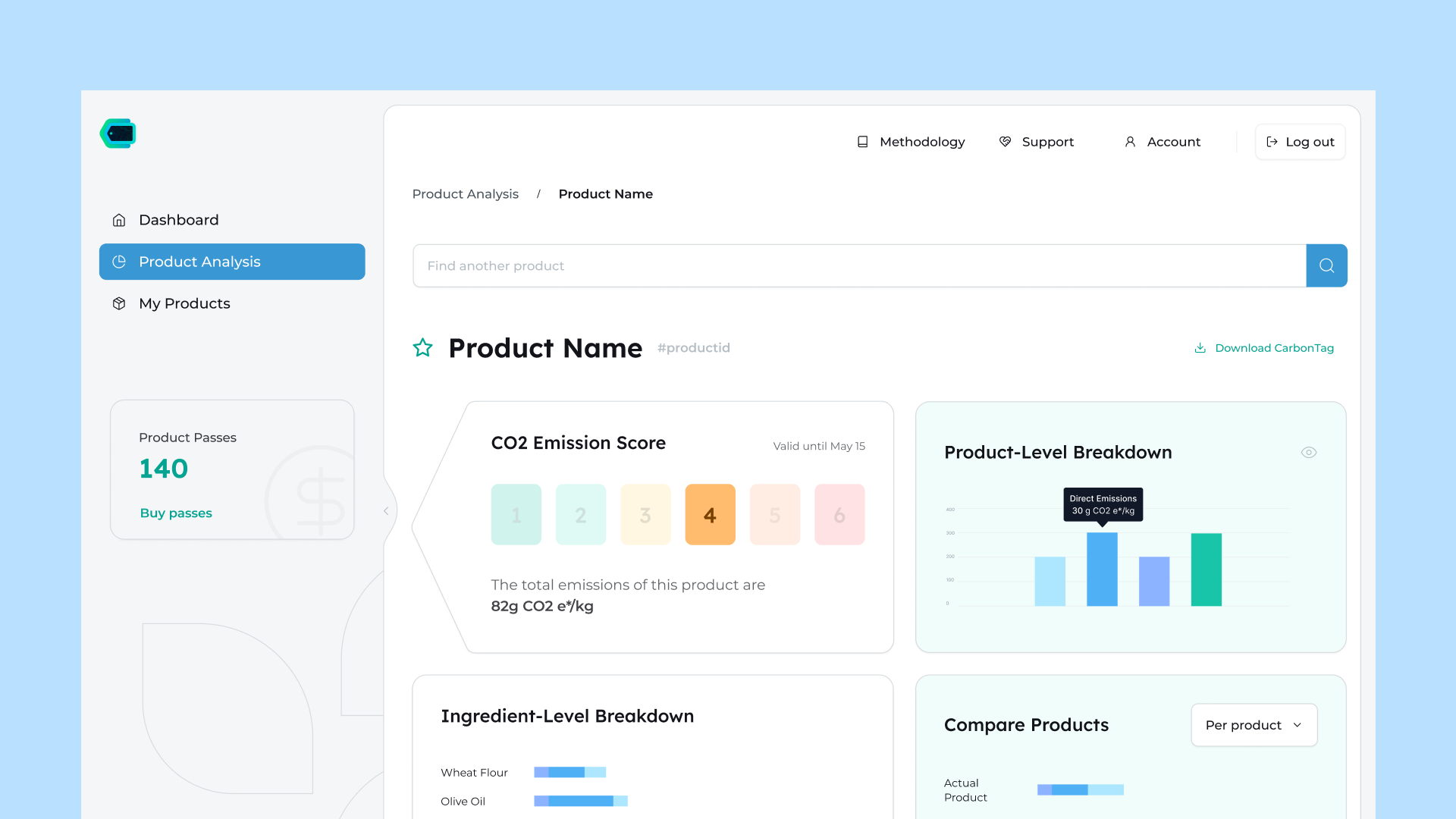
We designed the UI/UX and built CarbonTag's front-end in React, and structured the back-end on Supabase, integrating the company's proprietary emission-factor database. The platform turns carbon footprint calculation into a guided, multi-step form: the producer describes a product, its ingredients, origin, processing, packaging, transport, and storage, and gets back a full cradle-to-grave emissions analysis. Each product earns a CO2 Emission Score on a visual 1 to 6 scale, with a breakdown by type, by ingredient, and against other products, every number traceable to the scientific literature behind it. Around that, producers manage everything in one place: a "My Products" table with scores and CSV export, a dashboard with portfolio indicators, a Product Passes credit model, and multi-user accounts with dedicated support. Authentication, database, and APIs run on Supabase's scalable base, with documented code built for long-term maintenance.
Credits

Front-end: React
Back-end: Supabase
Auth: Supabase Auth
API: REST API
Markup & styling: HTML, CSS

Want to see more work?

See all projects
Talent Health
Product
Code
A recruitment platform built for healthcare: Talent Health connects professionals and institutions, with council validation and a trackable hiring pipeline.
Carvalheira
Website
A website for Carvalheira — the iconic parties on the surface, a full Brazilian entertainment ecosystem underneath. Built to show the whole company.
See all projects

Want to talk about a project?

From crafting unique brand identities to designing intuitive websites and valuable content, we're here to execute your ideas.
Contact us, and let's discuss your project.
Arthur Galvão
Co-founder & CBO
Let’s talk
Your Timezone (US)  20:26:24
Revelatio Timezone (BR) 20:26:24

Let’s build  
something together

Hello Osmo
By clicking “Accept”, you agree to the storing of cookies on your device to enhance site navigation, analyze site usage, and assist in our marketing efforts. View our Privacy Notice for more information.